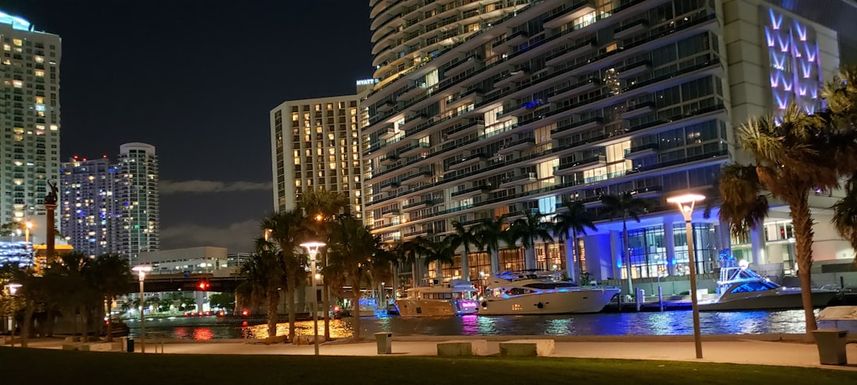
You've landed the job. Maybe it's in finance down in Brickell, maybe it's a startup in Wynwood, maybe it's remote-friendly enough that you could technically live anywhere — but you're choosing Miami. Smart. Now comes the real decision: where in Miami? Because this city doesn't just have neighborhoods; it has entirely different lifestyles hiding behind each zip code, and picking the wrong one will cost you months of happiness and hundreds in Ubers.
This isn't a tourism listicle. This is a practical breakdown for someone making $75K–$130K, trying to build a career, a social life, and maybe a little equity — all in a city where the sun is abundant but affordable housing is not.
The 7 Best Neighborhoods for Young Professionals in Miami (2026)
1. Brickell — The Power District
"Friday at 6pm: you close your laptop, take the elevator down 22 floors, and walk three minutes to a rooftop bar where half the people you see are also in finance. This is Brickell."
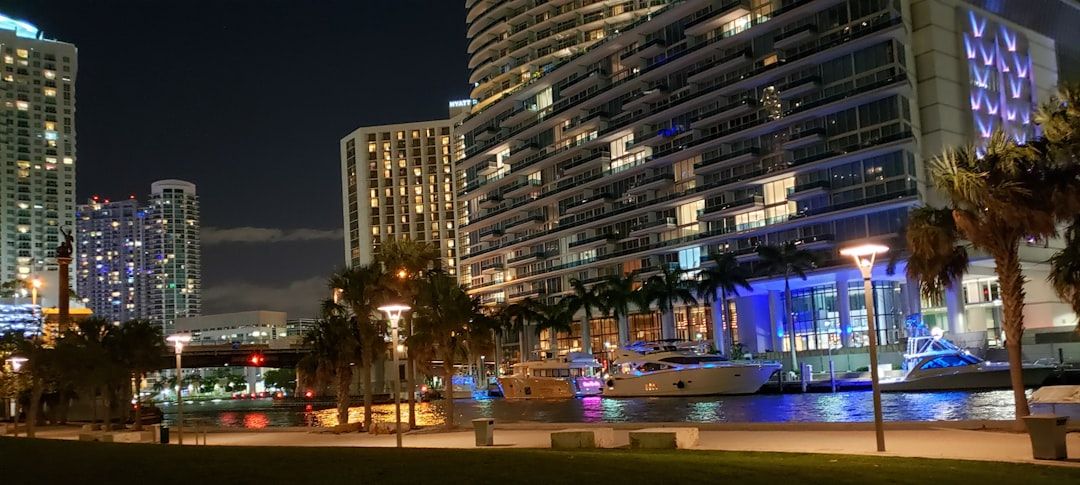
If you asked Miami Reddit where young professionals actually live, Brickell comes up first — every time. It's dense, walkable (by Miami standards), and built around ambition. The financial district means networking happens organically: at the gym, at Komodo, at brunch on Saturday when everyone's comparing bonuses and pretending they're not.
The tradeoff? Brickell is expensive, and it knows it. A one-bedroom runs $2,800–$4,200/month in the newer towers. Studios exist around $2,200 if you're willing to be on a lower floor or give up the bay view. The vibe is polished — sometimes sterile. If you want grit and culture with your career, you'll be Ubering to Wynwood on weekends.
Insider tip: Mary Brickell Village and Brickell City Centre give you walkable dining and grocery options. The Brickell City Centre Publix is genuinely one of the best-stocked grocery stores in Miami. The free Brickell trolley runs until 11pm on weekdays — use it.
Commute reality: If you work in Brickell, your commute is a walk. If you work in Doral or Coral Gables, plan for 30–45 minutes by car or a Metrorail + rideshare combo.
Browse Brickell listings and neighborhood data →
2. Wynwood — The Creative Professional's Bet
Wynwood is where you live if your LinkedIn title has the word "creative," "growth," or "founder" in it. The neighborhood has matured past its purely artistic roots — there are now proper apartment buildings, co-working spaces, and a density of cafés that would make a Brooklyn transplant feel at home. But it hasn't fully gentrified into blandness yet, and that tension is exactly what makes it interesting.
"Sunday morning: coffee from a spot with no sign, a short walk through murals that change every few months, then your laptop open in a courtyard until noon. Nobody's rushed. The work gets done."
Rents here run $2,400–$3,600 for a one-bedroom depending on whether you're in a converted warehouse or a new construction building. The dining and nightlife scene is genuinely excellent — and more diverse in terms of price point than Brickell. You can do $18 cocktails or $9 tacos on the same block.
Insider tip: Walkability in Wynwood is improving but remains uneven. The arts district core is very walkable; the edges less so. You will still need a car or a reliable Uber habit if your office is outside the neighborhood.
Explore Wynwood apartments and local data →
3. Coconut Grove — The Underrated Long Game
Coconut Grove gets overlooked because it feels "settled" — and honestly, that's the point. If you're a young professional who's done with the party phase and wants a neighborhood with trees, a waterfront, and actual community, the Grove is Miami's best-kept secret for your demographic.
It's quieter than Brickell. The restaurants are better than Wynwood (Jaguar, GreenStreet, Ariete). The marina gives it a weekend energy that feels like a vacation. And because it's not the hot topic on every "best neighborhoods" list, the rents are slightly more forgiving: $2,200–$3,200 for a one-bedroom in many buildings.
"Tuesday evening: a run along the bayfront, then dinner at a restaurant where the chef actually cooks the food. The neighbors know your name. You forget you're in a major city."
Insider tip: The Grove is excellent if you work in Coral Gables or the University of Miami area. The commute north to Brickell or downtown can be 20–35 minutes depending on traffic — not bad, but factor it in.
See Coconut Grove property data and listings →
4. Downtown Miami — The Affordable Entry Point
Downtown gets a bad reputation that's partially deserved and partially outdated. Yes, there are still rough blocks. Yes, it's louder and more chaotic than Brickell. But Downtown Miami is also where the Metromover runs free, where you can find a decent one-bedroom at $2,000–$2,800, and where the density of things to do — museums, Bayside, the Arena district — gives you a city feel that Brickell's corporate corridors sometimes lack.
For young professionals who are salary-conscious and want to maximize their savings rate while still living in a walkable urban environment, Downtown is the most practical answer in 2026. It's also the honest answer to the PAA question "Where do most young professionals live in Miami?" — many of them are here because Brickell priced them out.
Insider tip: The free Metromover connects Downtown to Brickell seamlessly. If you work in Brickell and can't afford Brickell rents, living in Downtown and taking the Metromover is a legitimate lifestyle optimization.
Browse Downtown Miami listings →
5. Little Havana — The Culturally Rich Value Play
Little Havana is not the first neighborhood most "best areas for young professionals Miami" guides include. It should be. Rents here are the most accessible of any neighborhood close to the urban core — one-bedrooms often run $1,800–$2,500 — and the neighborhood is in active transition, with new restaurants, coffee shops, and creative businesses moving in without displacing the Cuban cultural identity that makes it unique.
Calle Ocho is genuinely one of Miami's best streets for food and street life. The commute to Brickell is 10–15 minutes by car. If you're early in your career and want to save aggressively while living somewhere with authentic Miami character, Little Havana offers a value-to-lifestyle ratio that no other neighborhood can match.
Insider tip: Do your homework block by block. Little Havana varies significantly street to street. The blocks closest to Brickell and the
Miami River have improved most rapidly; focus your search there.
Explore Little Havana real estate data →
6. Coral Gables — The Grown-Up Choice
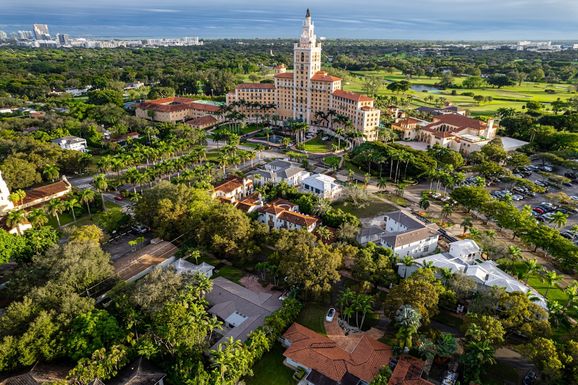
Coral Gables is where young professionals go when they're done being young professionals and starting to think about the next phase — buying, building equity, maybe starting a family. But it earns its place on this list because its quality of life is simply exceptional: tree-lined boulevards, the Miracle Mile dining strip, excellent walkability in its core, and a sense of permanence that Miami's newer towers can't replicate.
Rents run $2,500–$4,000 for a one-bedroom, comparable to Brickell. But you get more space, quieter streets, and a neighborhood that feels finished rather than perpetually under construction. If you work at the University of Miami, Baptist Health, or any of the corporate offices concentrated in the Gables, this is the obvious choice.
See Coral Gables listings and neighborhood profile →
7. Doral — The Practical Outlier
Doral is not glamorous. It is not the answer to "where should I live for my social life." But it is the answer to a different question: "where can I get the most apartment for my money while staying close to the airport, major employers, and a genuinely good restaurant scene that most people outside Miami don't know about?" Doral's dining scene — driven by a large Venezuelan and Colombian community — rivals anything in the city. Rents for a spacious one-bedroom run $1,900–$2,800.
If you work in Doral, the airport corridor, or travel frequently for work, this is the most rational choice on the list. The commute to Brickell (18–35 minutes by car, longer in rush hour) is the main tradeoff.
Browse Doral apartments and market data →
Miami Neighborhood Comparison: Young Professionals 2026
| Neighborhood |
1BR Rent Range |
Walkability |
Nightlife |
Networking |
Commute to Brickell |
Vibe |
| Brickell |
$2,800–$4,200 |
★★★★☆ |
★★★★★ |
★★★★★ |
Walk / 0 min |
Finance & power |
| Wynwood |
$2,400–$3,600 |
★★★☆☆ |
★★★★★ |
★★★★☆ |
15–20 min |
Creative & startup |
| Coconut Grove |
$2,200–$3,200 |
★★★★☆ |
★★★☆☆ |
★★★☆☆ |
15–25 min |
Relaxed & established |
| Downtown Miami |
$2,000–$2,800 |
★★★★☆ |
★★★☆☆ |
★★★☆☆ |
5 min (Metromover) |
Urban & value-driven |
| Little Havana |
$1,800–$2,500 |
★★★☆☆ |
★★★☆☆ |
★★☆☆☆ |
10–15 min |
Cultural & affordable |
| Coral Gables |
$2,500–$4,000 |
★★★★☆ |
★★★☆☆ |
★★★☆☆ |
20–30 min |
Polished & long-term |
| Doral |
$1,900–$2,800 |
★★☆☆☆ |
★★☆☆☆ |
★★☆☆☆ |
20–35 min |
Practical & spacious |
How to Actually Choose: The Decision Framework
- You're in finance or law and want the shortest path from desk to bar: Brickell. Pay the premium. Your network will pay you back.
- You're in tech, media, or anything with "creative" in the job description: Wynwood, full stop.
- You're 3–5 years in and starting to care about quality of life over FOMO: Coconut Grove or Coral Gables.
- You're fresh out of school, salary is under $70K, and you want to not eat ramen: Downtown Miami or Little Havana. Build savings first, upgrade later.
- You travel constantly for work and live near MIA corridor employers: Doral makes your life easier.
FAQ: Salary, Reality Checks & Where to Live
Where do most young professionals live in Miami?
Brickell is the highest-profile answer — it's where the finance and legal crowd concentrates, and its density of young professionals is visibly higher than anywhere else in the city. But the honest answer in 2026 is that Downtown Miami houses a large share of young professionals who want urban walkability without Brickell's rent premium. Wynwood is the third concentration point, particularly for tech and creative industry workers.
Is $90,000 a good salary in Miami in 2026?
It's workable — but it requires choices. At $90K gross, you're taking home roughly $5,800–$6,200/month after federal taxes (Florida has no state income tax, which is a genuine advantage). Spending $2,500–$2,800 on rent leaves you around $3,000–$3,500 for everything else. That's livable in Wynwood or Coconut Grove if you're not also paying off significant student loans. It's tight in Brickell's premium towers. You can live comfortably in Downtown Miami or Little Havana at this salary. The "lifestyle inflation trap" in Miami is real — the social scenes in Brickell and Wynwood can eat your budget fast if you're not disciplined.
Is $100,000 a good salary in Miami in 2026?
$100K in Miami, with no state income tax, puts you in a genuinely comfortable position. You're taking home roughly $6,400–$6,800/month. A $2,800–$3,200 apartment in Brickell or Wynwood is within range, leaving you $3,200–$4,000 for living expenses, savings, and the inevitable Miami social tax (concerts, restaurants, weekend trips to the Keys). At $100K+, Miami compares favorably to New York or San Francisco at the same nominal salary — your purchasing power is meaningfully higher. You can build savings while living in a neighborhood you actually want to be in.
Is Miami a good city for young professionals overall?
Yes — with caveats. The finance and tech ecosystems have grown substantially since 2020, and the city has retained much of the talent that relocated during the pandemic. The lack of state income tax is a real financial advantage. The social scene is excellent. The weather is a genuine quality-of-life variable that shouldn't be dismissed. The caveats: car dependency is real outside Brickell and Downtown, hurricane insurance and risk are genuine concerns for buyers, and the cost of living has risen faster than wages in many sectors. Go in clear-eyed and you'll find Miami is one of the best cities in the country for professionals under 40.
Which Miami neighborhood has the best nightlife for young professionals?
Brickell and Wynwood split this depending on what you mean by nightlife. Brickell is better for after-work drinks, rooftop bars, and the kind of networking that happens at places like Area 31, Komodo, or Sugar. Wynwood is better for music venues, gallery nights, and the kind of social scenes that emerge more organically. If you want both, living in either neighborhood and Ubering to the other is standard practice.