Florida Home Insurance Crisis 2026: What Buyers Need to Know
Florida's home insurance market is in the middle of a historic shakeout — and if you're buying a home in 2026, the cost and availability of coverage could make or break your deal. Carriers have pulled out, Citizens Insurance is shrinking fast, and premiums in some zip codes exceed $30,000 a year. Here's what's actually happening and what you can do about it.
395,144
Citizens policies remaining (down 50% from peak)
73%
Of all U.S. insurance losses attributed to Florida
14%
Rate drop in Miami & Broward announced by Governor DeSantis
11%
Florida's share of national insurance claims — yet absorbs 73% of losses
The Current State of Florida Home Insurance
Florida has been the most expensive, most unstable home insurance market in the United States for several years. The perfect storm: a hurricane-prone coastline, aggressive litigation culture, widespread assignment-of-benefits fraud, and reinsurance markets that no longer want Florida exposure. Between 2020 and 2024, over a dozen private carriers became insolvent or voluntarily left the state entirely.
The result: tens of thousands of homeowners were dumped into Citizens Property Insurance Corporation — the state-run insurer of last resort — pushing its policy count to nearly 1.4 million at peak. That's a systemic risk the state could not sustain.
"Florida represents 11% of all U.S. homeowner insurance claims but accounts for 73% of all insurance losses nationally. That math does not work for any private carrier trying to turn a profit."
In 2022 and 2023, the Florida legislature pushed through a series of reforms: eliminating one-way attorney fees, ending assignment of benefits in property claims, and shortening the statute of limitations for filing claims. Those reforms are now filtering through the system, and the data suggests they're working — but unevenly.
Rate Changes in 2025–2026: Who's Getting Relief
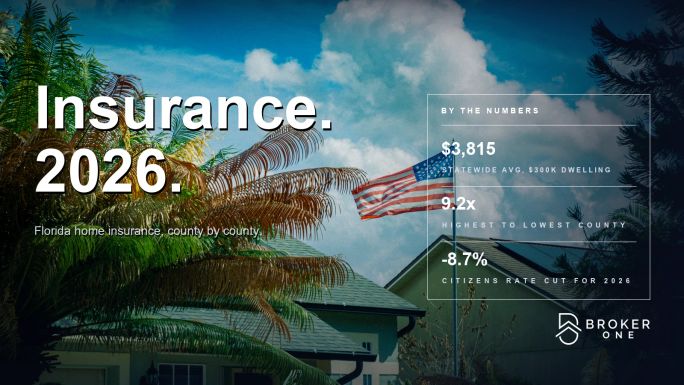
The headline news is real: some Florida homeowners are seeing premiums fall for the first time in years. Governor DeSantis confirmed a 14% rate reduction for Miami-Dade and Broward County Citizens policyholders in Spring 2026. Citizens' overall policy count has dropped to approximately 395,144 — roughly half of its peak — as private carriers re-enter the market through "depopulation" programs.
Pro Tip: Citizens depopulation means your policy may be assigned to a private carrier without your explicit consent. You have the right to reject the transfer — but only if the new carrier's rate is more than 20% higher than your Citizens premium. Always compare both options before accepting or rejecting.
However, the relief is not universal. The private carriers returning to Florida are largely new, thinly capitalized companies — some backed by out-of-state private equity. Consumer advocates and whistleblowers have raised concerns about whether these replacement carriers will pay claims reliably when the next major storm hits. The Florida Department of Financial Services has received complaints about claim delays and lowball settlements from several newly licensed carriers.
14% Citizens reduction applies; wind exposure high
Monroe County (Keys)
$15,000–$40,000+
Critical
Most private carriers refuse to write new policies
Lee/Charlotte (SW Florida)
$7,000–$22,000
Stressed
Post-Ian damage still affecting risk models
Palm Beach County
$5,500–$15,000
Moderate
Inland properties significantly cheaper
Central Florida (Orlando area)
$2,500–$6,000
Stable
No direct coast exposure; most carriers writing policies
Panhandle (Pensacola/Panama City)
$4,000–$12,000
Stressed
Post-Michael recovery; limited carrier options
Common Mistake: Buyers in South Florida often calculate affordability using the seller's current insurance rate. Do not do this. When a home changes hands, many policies are re-underwritten from scratch. Your quote will be based on current market conditions — which may be 30–60% higher than what the seller was paying under a grandfathered policy.
Citizens vs. Private Insurance: Which Is Better in 2026?
This is no longer a simple answer. Citizens has historically been seen as the carrier of last resort — lower premiums but with assessment risk (meaning all Florida policyholders can be charged a surcharge if Citizens runs a deficit after a major storm). Private carriers avoid this systemic risk but vary wildly in financial strength and claims handling.
Factor
Citizens Property Insurance
Private Carrier
Premium competitiveness
Competitive post-reform
Varies widely
Claims reliability
State-backed; reliable
Depends on carrier financial strength
Assessment risk
Yes — all FL policyholders exposed
No
Coverage limits
$700K residential cap
Up to insurable value
Availability
Must be "insurer of last resort" — you need rejection letters
If available in your area, no restrictions
Rate stability
Legislature-controlled; more predictable
Can change significantly at renewal
If you're offered a private carrier through Citizens depopulation, check the carrier's Demotech rating before accepting. A rating of "A" or better means adequate financial reserves. Anything lower is a red flag heading into hurricane season.
What Does Home Insurance Cost by Property Value?
One of the most common questions buyers ask: how much will insurance cost for a $500,000 home in Florida? The honest answer is: it depends heavily on location, age, construction, and elevation. But here are realistic 2026 ranges for coastal South Florida specifically:
Home Value
Inland (Miami-Dade/Broward)
Coastal / High Wind Zone
Keys / Extreme Exposure
$300,000
$3,500–$6,000/yr
$6,000–$12,000/yr
$15,000–$25,000/yr
$500,000
$5,500–$9,500/yr
$10,000–$20,000/yr
$22,000–$40,000/yr
$750,000
$7,500–$13,000/yr
$15,000–$28,000/yr
$30,000–$55,000/yr
$1,000,000+
$10,000–$18,000/yr
$20,000+/yr
Often uninsurable privately
Note on Flood: These figures are for homeowner's (wind/fire/theft) coverage only. Flood insurance is separate — through FEMA's National Flood Insurance Program or private flood carriers. In many South Florida zip codes, flood insurance adds another $1,500–$8,000 annually. Read our complete Florida flood zone guide before making an offer.
What Buyers Should Do Before Making an Offer
Insurance due diligence has become as important as the home inspection in Florida. Here's the sequence that protects you:
Get an insurance quote before you make an offer. Not after. Ask your agent to reach out to at least three carriers with the property address, age, and construction type. This takes 24–48 hours but can be the difference between a sound investment and a money pit.
Order a wind mitigation inspection. This is a separate inspection (about $150) that documents hurricane-resistant features: roof shape, roof-to-wall connections, opening protection. A good wind mit report can cut your wind premium by 20–50%. It's one of the highest-ROI documents you can get.
Check the CLUE report. The Comprehensive Loss Underwriting Exchange shows past insurance claims on the property. Sellers are required to disclose, but a CLUE report catches what they forget — or omit.
Verify flood zone designation. Check FEMA's Flood Map Service Center. If the property is in Zone AE or VE, flood insurance is mandatory with a federally backed mortgage and the cost will be significant.
Ask about the 4-point inspection. Carriers in Florida now routinely require a 4-point inspection (roof, electrical, plumbing, HVAC) for homes over 25–30 years old. A failing panel or aging roof can trigger policy denial or exclusions.
Common Mistake: Waiving the insurance contingency. In a competitive offer situation, buyers sometimes waive this protection. In Florida's 2026 market, this is genuinely dangerous. If you can't obtain insurable coverage at a cost you can afford, you need to be able to walk away.
How to Lower Your Florida Home Insurance Premium
You have more leverage than you think. These are the moves that actually move the needle:
Hip roof vs. gable roof: Hip roofs (pyramid shape) perform significantly better in wind events. Underwriters know this. A hip roof alone can reduce your wind premium by 15–25%.
Impact windows and doors: Replacing standard windows and doors with impact-rated units qualifies for substantial wind mitigation credits. In South Florida, this is often a $10,000–$25,000 upgrade that pays back in lower premiums within 5–8 years.
Roof age matters enormously: A roof under 5 years old is significantly cheaper to insure than a 15-year-old roof. When evaluating older homes, factor in roof replacement cost — many carriers will not write a new policy on a roof over 15–20 years old at all.
Raise your deductible: Florida wind policies typically have a separate hurricane deductible, often 2–5% of insured value. Moving from 2% to 5% can reduce premiums substantially — but make sure you can self-insure that gap.
Bundle with auto: While less impactful in Florida than in other states, bundling still generates discounts with carriers that write both lines.
Work with an independent broker: Not a captive agent. An independent broker shops your risk across multiple carriers simultaneously and knows which companies are currently competitive in your specific zip code.
For properties in flood-prone areas, also consider private flood insurance as an alternative to NFIP — private carriers can sometimes offer broader coverage at lower cost for well-elevated properties. See our wind mitigation inspection guide for a full breakdown of the credits available.
Areas Actively Improving — Where to Watch
The South Florida market is showing genuine signs of stabilization. The legislative reforms are working as intended — litigation rates are down, reinsurance costs are stabilizing, and new carriers are entering the state. Buyers in Miami-Dade and Broward County who purchase in 2026 may benefit from a market that's past its worst point.
That said, Monroe County and the Florida Keys remain structurally difficult. The combination of extreme wind exposure, limited buildable land, aging housing stock, and near-total private carrier withdrawal means insurance costs there will remain exceptional for the foreseeable future. Buyers in that market should plan for Citizens as their primary option and budget accordingly.
Frequently Asked Questions
Will property insurance go down in Florida in 2026?
Yes — selectively. Citizens Property Insurance policyholders in Miami-Dade and Broward are seeing confirmed rate reductions of approximately 14% in Spring 2026. Several private carriers have also filed rate decreases as litigation reform shows results. However, reductions are not statewide or uniform. High-risk coastal zones and older homes are still seeing elevated rates, and newly written policies are being priced at current market levels regardless of what the seller paid.
Will Florida homes be uninsurable?
Blanket uninsurability is not the current reality for most of Florida. The private market has largely abandoned the state's highest-risk zones — coastal Monroe County, parts of the Panhandle, and beachfront properties in high wind zones — but coverage remains available through Citizens as a backstop. The risk is not zero coverage; it's very expensive coverage from thinly capitalized carriers or the state-run insurer, with the associated assessment risk that entails.
How much is home insurance for a $500,000 house in Florida?
In 2026, a $500,000 home in South Florida carries a realistic annual premium range of $5,500–$20,000 depending on location and construction. An inland property in Miami-Dade with a new hip roof, impact windows, and good elevation can be insured for $5,500–$9,500. The same value home directly on the coast, in a wind zone, with an older gable roof can cost $15,000–$20,000 annually — before flood insurance is added.
Which insurance companies are still writing policies in Florida?
As of 2026, carriers actively writing in Florida include Citizens (state-run), Universal Property & Casualty, Heritage Insurance, Slide Insurance, Homeowners Choice, and several new entrants backed by private equity. Availability varies significantly by county and zip code. Working with an independent broker who specializes in Florida is the most reliable way to identify which carriers are currently competitive in your target area.
The bottom line for buyers: Florida's insurance market in 2026 is not the catastrophe it was in 2022–2023, but it is not normal either. Budget realistically — add your full insurance estimate to your monthly payment calculation before you fall in love with a property. The buyers who get burned are the ones who don't find out the real insurance cost until after they're under contract.
Next Steps
If you're actively shopping for property in South Florida, here's where to start:
Use our Miami-Dade property search or Broward property search to find homes with publicly available property data including year built and construction type — the key variables that determine your insurability.
Before writing any offer, get an insurance quote. Share the parcel ID, address, and your target coverage amount with an independent Florida insurance broker.
Connect with a Broker One agent who works this market daily and knows which neighborhoods are seeing insurance cost relief and which remain structurally expensive.
Broker One Editorial
Neighborhoods, Lifestyle & Buyer Guides
Broker One Editorial writes the neighborhood guides, lifestyle coverage, and buyer advice that help readers navigate South Florida real estate. We mix on-the-ground reporting with data from Broker One Research — if a restaurant is mentioned, someone on the team has eaten there; if a neighborhood is described, someone has walked it. Our editorial writers are licensed Florida real estate professionals, long-time South Florida residents, or both. Every lifestyle claim that can be verified with data is checked against our research team's datasets before publication.