There's a specific kind of Sunday morning that tells you everything about a neighborhood. It's when the kids are racing ahead on the bike path, someone's carrying a paper bag of Cuban pastries, and you're not once checking your phone for directions or news alerts — because you're exactly where you're supposed to be.
Miami gets a bad reputation as a city built for nightlife and luxury condos. That reputation isn't entirely wrong. But buried beneath the flash is a serious, school-district-obsessed, park-rich, genuinely livable family city — if you know where to look. And in 2026, with inventory still tight and mortgage rates stubbornly elevated, knowing exactly which neighborhood fits your family's life (and budget) matters more than ever.
We ranked eight Miami-area neighborhoods not by vibe alone, but by the factors that actually determine whether your kid thrives and your commute doesn't break you: school performance, safety trends, park access, walkability, housing cost reality, and whether the community has any soul left after a decade of appreciation.
The Ranked Neighborhoods
1. Coral Gables — The Gold Standard (With a Gold Price Tag)
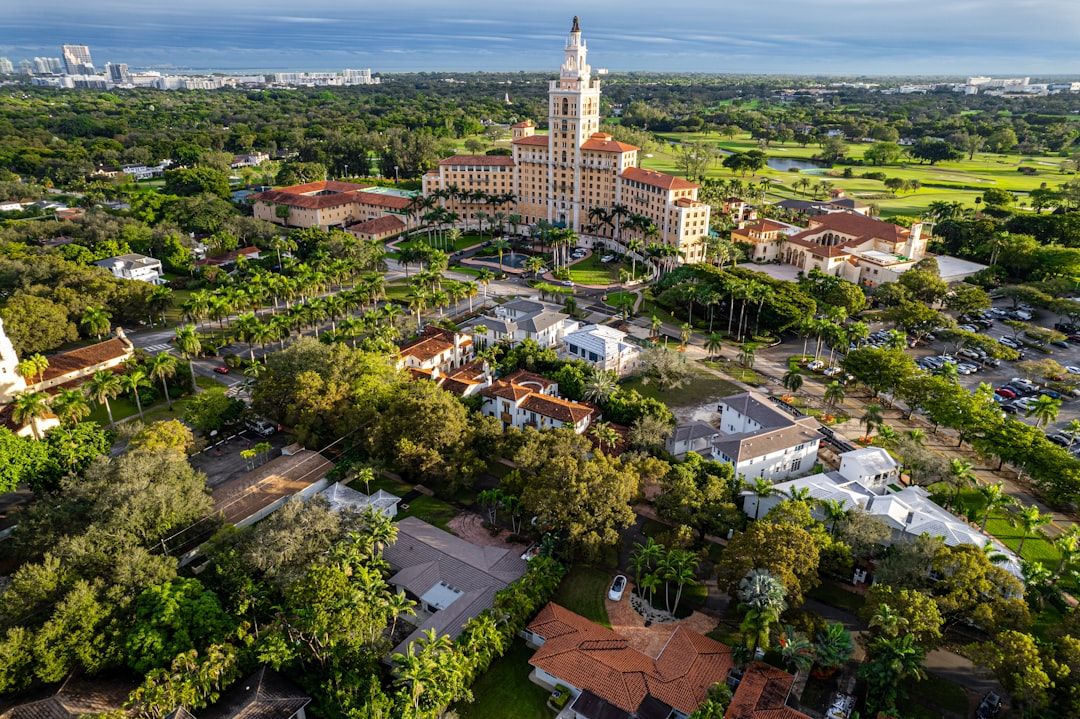
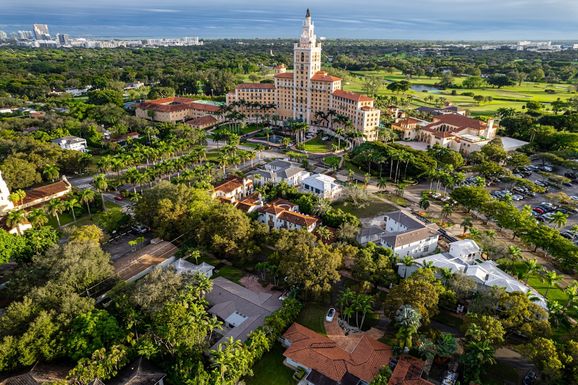
If you could design a family neighborhood from scratch, you'd probably end up somewhere close to Coral Gables. Mediterranean architecture, 150-year-old banyan trees arching over Miracle Mile, a public library that actually hosts events people attend — Coral Gables is what "established" looks like when it's done right.
The Gables-Merrick school cluster is consistently among Miami-Dade's top performers. George Washington Carver Middle and Coral Gables Senior High both score in the top decile countywide. Families don't move here despite the schools — they move here for them.
"We looked everywhere. We kept coming back to the Gables. It's the only place in Miami where I feel like my kids can actually walk somewhere." — Coral Gables parent, Broker One client survey 2025
The honest downside: entry-level single-family homes now clear $1.1M routinely. Condos exist in the $500–700K range, but they don't give you the yard that makes the Gables the Gables. Budget accordingly.
Insider tip: The western streets off Red Road — Alhambra Circle, Salzedo — offer slightly more house for the dollar than the trophy blocks closer to the Biltmore. Same schools, less Instagram foot traffic.
2. Pinecrest — The Quieter, Slightly More Affordable Answer
Pinecrest is what happens when Coral Gables grows up and moves south. Wide lots. Deep setbacks. The kind of neighborhood where the biggest annual drama is who won the holiday decorating contest. It's not exciting — and that's exactly the point.
Pinecrest Elementary and Palmetto Senior High (technically in the Pinecrest cluster) are two of the best-rated public schools in all of South Florida. The Village of Pinecrest itself is incorporated, meaning local government that actually responds to potholes and doesn't let strip malls metastasize.
Housing starts around $900K for entry SFH and climbs steeply from there. But for what you get — lot size, school quality, safety — the value ratio relative to Coral Gables is real. If your priority is a yard where kids can actually disappear for an afternoon, Pinecrest frequently wins.
3. Palmetto Bay — The Best Value in the South Miami Family Belt
The family neighborhood that Miami's real estate media consistently undercovers. Palmetto Bay sits just south of Pinecrest, incorporated in 2002 specifically because residents wanted local control over development — and it shows.
You'll find newer construction here than in Coral Gables, larger lots than Coconut Grove, and a community that actively invests in its parks system. Coral Reef Elementary and Southwood Middle both earn strong marks. The dining scene is modest, the nightlife is nonexistent, and parents here will tell you that's a selling point.
"We could've stretched into Pinecrest. We stayed in Palmetto Bay. Bigger lot, same schools, and we don't feel like we're performing wealth — we're just living." — Palmetto Bay homeowner
Entry-level SFH starts around $750K. Meaningfully more inventory than the neighborhoods above, which means more negotiating room in a slow market. Worth every bit of serious consideration.
4. Coconut Grove — Character, Nature, and a Real Sense of Place
No neighborhood in Miami has more genuine soul than Coconut Grove. The oldest continuously inhabited neighborhood in Miami, it has the bayfront, Peacock Park, the bohemian architecture, and a walkability score that humiliates most of the city.
For families, the Grove is complicated. The public school options in the immediate area are mixed — many Grove families opt for private schools or the magnet system. But for a family that prioritizes outdoor access (Dinner Key Marina, Bayshore Drive bike paths, the banyan canopy throughout the neighborhood) and community texture over school convenience, the Grove earns its place on this list.
Prices range enormously — from $700K condos to $5M+ estates on the water. The middle market ($1–1.8M) gets you a genuinely characterful home walking distance to the bay. That's a trade-off only you can evaluate.
Insider tip: The North Grove (north of Bird Avenue) offers the character and the school adjacency to better-rated clusters at prices that are 15–20% below the main Grove market. Often overlooked.
5. Key Biscayne — Island Life, Island Prices, Island Patience Required
Key Biscayne is the fantasy version of Miami family life. A literal barrier island with one road in and out, two state parks, a small walkable village center, and a public school (Keybiscayne K-8) that functions like a tight-knit community hub.
The tradeoffs are real: that single causeway turns into a parking lot during rush hours and after sporting events. Grocery options are limited. Everything costs more because everything has to be trucked in. And housing — median SFH prices sit above $2.5M, with entry-level condos starting around $800K for something livable.
For families where one or both parents work remotely, or have significant schedule flexibility, Key Biscayne delivers an almost incomparable quality of life. For dual commuters, the causeway will age you prematurely.
6. Kendall — The Practical Choice Nobody Wants to Admit They Love
Kendall isn't sexy. The strip malls are relentless, the walking is minimal, and the address lacks the cultural cache of the neighborhoods above. But Kendall is also where a huge swath of Miami's actual middle-class families live, for good reason.
The school options are genuinely strong — several A-rated elementary and middle schools operate throughout the area. The housing stock offers the largest lots and most square footage per dollar in Miami-Dade proper. And the community infrastructure — parks, libraries, youth sports leagues — is well-funded and well-used.
Entry-level SFH starts around $500–600K. You will own a yard, a two-car garage, and a neighborhood where your kids' classmates live within biking distance. The commute north to Brickell or Doral is the major variable to price in honestly.
7. South Miami — The Underrated Urban-Suburban Sweet Spot
Often overshadowed by its neighbors, South Miami (the incorporated city, not the general area) punches above its weight for family livability. Sunset Drive is genuinely walkable by Miami standards. The farmer's market draws the community. And South Miami K-8 and South Miami Senior High both outperform expectations.
Entry pricing is more accessible than Coral Gables — SFH starts around $800K — with the added benefit of Metrorail access on the South Miami station, a legitimately useful commute option.
"We're technically 'South Miami' not 'Coral Gables,' and I've stopped correcting people who assume otherwise. Same tree canopy, same quality of life, $200K less." — South Miami homeowner
8. Silver Bluff — The Emerging Pick for Budget-Conscious Families Who Want Character
Silver Bluff sits along the Miami River southwest of Brickell. It's not fully arrived yet — the school options require more research and often private or magnet school commitments — but for a family with flexibility on schooling, it offers something increasingly rare: genuine neighborhood character at prices that haven't yet been fully discovered.
SFH entry around $650–800K. Proximity to Coconut Grove and Coral Gables without the premium. A neighborhood that still has architectural diversity and longtime residents. Worth watching closely in 2026 as inventory in the established neighborhoods tightens further.
Neighborhood Comparison: At a Glance
Neighborhood
SFH Entry Price
Public Schools
Safety
Parks & Nature
Walkability
Vibe
Coral Gables
$1.1M+
⭑⭑⭑⭑⭑
Very High
Strong
Good
Elegant, established
Pinecrest
$900K+
⭑⭑⭑⭑⭑
Very High
Good
Low
Quiet, suburban prestige
Palmetto Bay
$750K+
⭑⭑⭑⭑
High
Very Good
Low
Community-first, unpretentious
Coconut Grove
$700K+
⭑⭑⭑
High
Excellent
Very Good
Bohemian, bayfront, character-rich
Key Biscayne
$800K+ (condo)
⭑⭑⭑⭑
Very High
Excellent
Good
Island sanctuary, premium isolation
Kendall
$500K+
⭑⭑⭑⭑
Good
Good
Very Low
Practical, spacious, car-dependent
South Miami
$800K+
⭑⭑⭑⭑
High
Good
Good
Urban-suburban balance, underrated
Silver Bluff
$650K+
⭑⭑⭑
Moderate
Moderate
Moderate
Emerging, characterful, watch-list
School-by-School: The Public Schools Behind These Rankings
"Good schools" is shorthand that loses meaning when you're choosing between two A-rated clusters $400K apart. Here are the specific public schools parents evaluate when they narrow in on a neighborhood — with the actual performance context.
Neighborhood
Feeder Elementary
Feeder Middle
Feeder High
Grade
Coral Gables
Coral Gables Elementary; Sunset Elementary
Ponce de Leon Middle; G.W. Carver Middle
Coral Gables Senior High
A
Pinecrest
Pinecrest Elementary
Palmetto Middle
Miami Palmetto Senior High
A
Palmetto Bay
Coral Reef Elementary
Southwood Middle
Miami Palmetto Senior High
A
Key Biscayne
Key Biscayne K-8 Center (same campus)
— (K-8 spans)
MAST Academy (magnet, zoned access)
A
Kendall / West Kendall
Ludlam Elementary; Sunset Park Elementary
Howard D. McMillan Middle
Miami Killian Senior High
A/B
South Miami
South Miami K-8 Center
South Miami Middle
Coral Gables Senior High (split zoning)
A
Coconut Grove
Frances S. Tucker Elementary; Coconut Grove Elementary
Design & Architecture Senior High (DASH, Design District) — top-10 public high school in the US by Niche rating, application-based.
Coral Reef Senior High (Palmetto Bay) — one of South Florida's most competitive high schools, academies for law, health, engineering; application-based.
Belen Jesuit Preparatory (private, Westchester-adjacent) — the go-to for Catholic all-boys families, waitlist-heavy.
If You're Open to Broward: The Family-Suburb Alternatives
Everything above is Miami-Dade. If your employer is flexible on location, or you're commuting to Fort Lauderdale / Sawgrass / Weston corridor employers, Broward County offers family suburbs that outperform most of this list on school-grade consistency — at materially lower entry prices.
Weston — the frequent Coral Gables comparison. Polished, planned, entirely A-rated schools, large lots, active family culture. Premium pricing for Broward but well below Coral Gables.
Cooper City — smaller, quieter sibling to Weston. Cooper City High School is top 10% nationally. All six feeder elementaries are A-rated. Entry prices noticeably more accessible.
Parkland — North Broward's equivalent. A-rated K-12, equestrian character, larger lots, top-ranked high school.
Pembroke Pines — larger and more mixed than the above, but individual neighborhoods within it rival Weston for family livability at broader price access.
The honest trade-off: Broward lacks Coral Gables' architecture and Coconut Grove's walkability. You're trading cultural texture for school-grade consistency, bigger houses, and lower property-tax bills. For many relocating families with school-age kids, that trade is obviously worth it.
FAQ: What Miami Families Actually Want to Know
What is the most family-friendly neighborhood in Miami?
Coral Gables holds the top position by nearly every measurable metric — school performance, safety, park access, walkability, and community infrastructure. The caveat is price: entry-level single-family homes now exceed $1.1M. For families where budget is a genuine constraint, Palmetto Bay and Kendall offer comparable school quality and safety at meaningfully lower price points.
Where do wealthy families live in Miami?
The affluent family market concentrates in Coral Gables (especially the Old Spanish section near the Biltmore), Pinecrest (south of Sunset Drive), Key Biscayne, and Coconut Grove's bayfront estates. Bal Harbour and Fisher Island attract ultra-high-net-worth buyers but are more second-home markets than primary family neighborhoods.
Is $70,000 enough to live in Miami in 2026?
A household income of $70,000 makes homeownership in the neighborhoods on this list effectively inaccessible without significant additional assets. At current rates, a $500K home requires approximately $95–105K gross annual household income to qualify conservatively. At $70K, realistic options are: renting in Kendall or western Miami-Dade, pursuing FHA financing on a condo at the lower end of the market, or targeting municipalities further from the city core. Miami's median household income is approximately $65K — which means the majority of residents are renters, not owners, in 2026.
Which Is Right for YOUR Family?
The honest answer depends on three questions most people avoid asking themselves directly.
What are you actually willing to spend? Not what you could theoretically stretch to — what you can spend without financial stress reshaping your daily life. The neighborhoods on this list range from $500K to $2.5M+. That's not a range, that's multiple different cities.
How important are public schools vs. private options? If public school performance is non-negotiable, your map narrows considerably: Coral Gables, Pinecrest, Palmetto Bay, and parts of Kendall. If you're open to private or magnet schools, Coconut Grove and Silver Bluff become competitive.
What does your family actually do on weekends? Beach and water access points toward Key Biscayne. Bike paths and nature toward Coconut Grove or Palmetto Bay. Walkable restaurants and cultural events toward Coconut Grove or Coral Gables. Quiet yard time toward Pinecrest or Kendall.
Miami is big enough to have the right neighborhood for almost every family profile. The mistake most buyers make is optimizing for prestige rather than fit. The family that thrives in Kendall would be quietly miserable paying a $1.3M Coral Gables mortgage. The Coconut Grove family would feel stranded in Pinecrest.
Start with how your family actually lives. The right neighborhood will follow.
Broker One Editorial
Neighborhoods, Lifestyle & Buyer Guides
Broker One Editorial writes the neighborhood guides, lifestyle coverage, and buyer advice that help readers navigate South Florida real estate. We mix on-the-ground reporting with data from Broker One Research — if a restaurant is mentioned, someone on the team has eaten there; if a neighborhood is described, someone has walked it. Our editorial writers are licensed Florida real estate professionals, long-time South Florida residents, or both. Every lifestyle claim that can be verified with data is checked against our research team's datasets before publication.