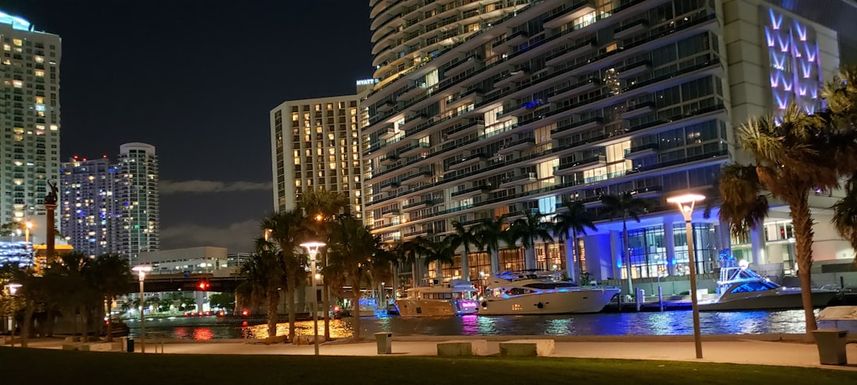
The Vibe Test: Two Neighborhoods, Two Completely Different Lives
Close your eyes for a second. It's 7:30 on a Tuesday evening. In one version of your life, you're stepping off an elevator in a glass tower, the bay glittering sixty floors below you, a dry martini waiting at the rooftop bar three blocks away. The city hums with ambition. Everyone here is doing something. In another version, you're walking home through a park, salsa music drifting from somewhere nearby, street art on the wall, a farmers market still packing up on the corner. The city feels alive differently — messier, louder, more itself.
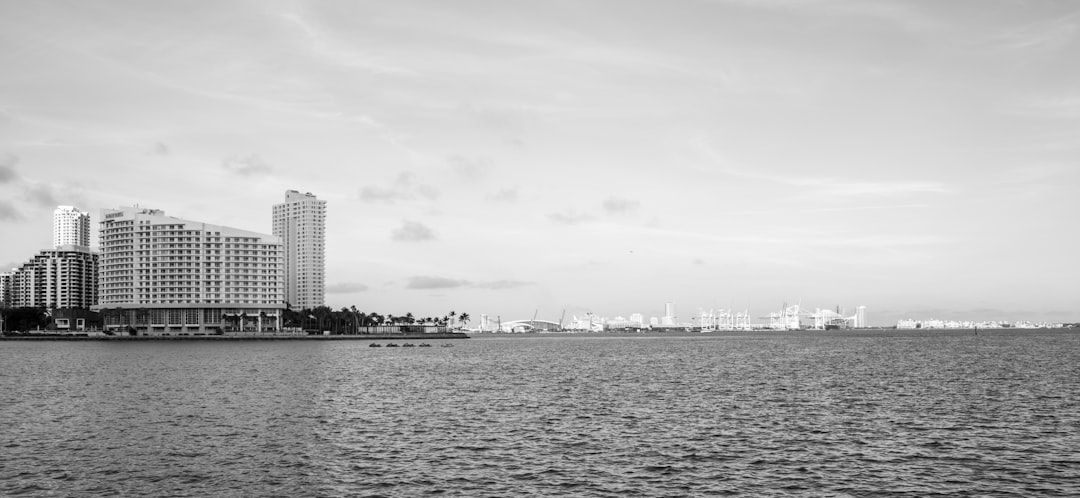
That's Brickell vs Downtown Miami in a nutshell. They're less than two miles apart — you can literally see one from the other — but they attract different people, promise different lives, and reward different priorities. This guide is not a spreadsheet. It's an honest look at what it actually feels like to live in each neighborhood, written for people who are genuinely weighing the choice.
If you're researching Brickell vs Downtown Miami living, you've probably already seen the stat articles. This isn't that. Let's talk about Sunday mornings, parking nightmares, the walk to your coffee shop, and whether your neighbors are investment bankers or muralists.
Brickell: Miami's Manhattan Moment
"You don't just live in Brickell. You perform living in Brickell. The lobby of your building is your social life, and everyone dressed for it."
Brickell (zip code 33131) is South Florida's financial district, and it wears that identity proudly. The last decade has transformed it from a sleepy banking corridor into one of the most walkable, vertical, amenity-stuffed neighborhoods in the entire Southeast. Brickell City Centre brought high-end retail. Mary Brickell Village brought the bar and restaurant scene. Whole Foods and Trader Joe's showed up. Then the hedge funds. Then the remote workers fleeing New York with their crypto gains. Then everyone else.
The result is a neighborhood that feels almost aggressively polished. Sidewalks are clean. The MetroMover is free and actually useful here. Uber surge pricing hits at 2am because everyone wants to go to the same three bars. If you're single, ambitious, and want a social life that runs on its own momentum, Brickell is genuinely hard to beat.
What Living Here Actually Looks Like
- Your morning run is along the Brickell Riverwalk, dodging cyclists and dog walkers
- Lunch options within a five-minute walk: legitimate. Dinner options: excellent.
- The grocery store is underground in a mall, which feels absurd until it saves you in a downpour
- You'll know your building's concierge by name within two weeks
- Traffic on Brickell Avenue between 5-7pm is a personal character test you will fail
Insider tip: If you're looking at Brickell condos, the stretch along Brickell Key offers water views and slightly more calm — but you'll pay a premium and you're technically on an island. Factor in the one bridge. It matters more than you think.
Price-per-square-foot for resale condos in Brickell runs roughly $800–$1,200, with pre-construction towers pushing $1,700–$2,200+ depending on finish level and developer cachet. HOA fees are notoriously high — $1,200–$2,000/month in newer luxury buildings isn't unusual, and that's before you factor in the $80,000 parking spot. Want to explore available listings? Browse Brickell condos and rentals here.
Downtown Miami: The City That's Still Figuring Itself Out (In a Good Way)
"Downtown Miami on a Saturday morning is one of the best-kept secrets in the city. Bayfront Park is basically empty. The farmers market is going. A cruise ship is doing something dramatic in the distance. It feels like yours."
Downtown Miami (zip code 33132) gets an unfair reputation, mostly from people who drove through it once and decided that was enough. The truth is messier and more interesting. Downtown is a neighborhood in active transformation — it has Bayside Marketplace, Bayfront Park, the Pérez Art Museum, the Adrienne Arsht Center for the Performing Arts, Wynwood a short drive north, and a growing residential population that's younger, more diverse, and more willing to bet on potential than pay for perfection.
Is it rough around some edges? Yes. Is it improving? Absolutely. The question isn't whether Downtown Miami has problems — it does — but whether the trajectory matters to you more than the current state.
What Living Here Actually Looks Like
- Your commute to the Port of Miami, Edgewater, or the Design District is genuinely easy
- Bayfront Park for morning workouts is an underrated gem — waterfront, well-maintained, and usually quiet on weekdays
- Cultural calendar is legitimately excellent: art fairs, concerts, museum nights, boat shows
- Restaurant scene is patchier than Brickell — some incredible spots, some dead zones
- Parking is cheaper, street life is more varied, tourists are more present near Bayside
Insider tip: The question "is Downtown Miami safe?" comes up constantly. The honest answer: it depends enormously on the block and the time. The immediate Bayfront Park area and the newer residential towers on Biscayne are fine. Some blocks west of Biscayne, particularly at night, require more awareness. Do your specific block research before signing a lease.
Price-per-square-foot in Downtown runs roughly 10–15% less than Brickell for comparable product. HOA fees are typically lower. Median condo prices reflect a value proposition: similar square footage for meaningfully less money, with a culture/parks/growth story instead of a prestige/polish story. See current Downtown Miami listings and market data here.
The Numbers Side by Side
| Factor |
Brickell (33131) |
Downtown Miami (33132) |
| Median Condo Price |
~$650,000–$900,000 |
~$500,000–$750,000 |
| Price per Sq Ft (Resale) |
$800–$1,200 |
$650–$950 |
| Typical HOA (newer buildings) |
$1,200–$2,000/mo |
$800–$1,400/mo |
| Walkability |
Excellent (Walk Score ~90) |
Very Good (Walk Score ~85) |
| Nightlife & Dining |
Dense, polished, expensive |
Cultural, patchy, improving |
| Family-Friendliness |
Moderate (few schools nearby) |
Moderate (Bayfront Park helps) |
| Commute (to Brickell financial core) |
On foot / MetroMover |
5–10 min MetroMover or Uber |
| Vibe |
Live-work-luxe, aspirational |
Cultural, urban-gritty, evolving |
Data reflects current South Florida market conditions. For verified real-time figures, check live listings on Broker One.
How Far Is Brickell from Downtown Miami?
This is one of the most Googled questions about these two neighborhoods, and the answer surprises people: about 1.5 miles. You can walk it in 25–30 minutes along the waterfront. The MetroMover connects them in under 10 minutes for free. An Uber at off-peak hours is less than $8. If you're worried about feeling isolated in one versus the other, don't — they're effectively the same walkable core with different personalities at each end.
The question "is Brickell Downtown Miami?" also comes up a lot. Technically no — they're adjacent but distinct neighborhoods with their own zip codes, neighborhood identities, and real estate markets. But to the rest of Florida and certainly the rest of the country, it's all just "Miami downtown area." For practical day-to-day living purposes, working in one while living in the other is entirely normal and sustainable.
Is This Lifestyle For You? Honest Pros and Cons
Choose Brickell If:
- Your career is finance, tech, law, or anything that benefits from proximity to the Brickell financial core
- You want a social life that requires zero effort to activate — it's just happening around you
- You're willing to pay a premium for a neighborhood that already works
- You care about walkability, building amenities, and general neighborhood polish
- You're single or a couple without kids — Brickell is not particularly kid-optimized
Brickell Honest Cons:
- Traffic is legitimately brutal during commute hours on Brickell Avenue
- HOA fees can eat a significant portion of your monthly budget
- It can feel homogeneous after a while — everyone is doing the same thing in the same buildings
- Pre-construction risk is real; several projects have delayed or changed significantly
Choose Downtown If:
- You want culture, parks, and waterfront access without the Brickell price tag
- You're excited by neighborhoods that are becoming something, not just what they already are
- You work in the arts, hospitality, creative industries, or the port
- You want more space per dollar and are willing to trade some polish for value
- You actually use parks and museums, not just post about them
Downtown Honest Cons:
- Block-by-block safety variance is real — do your research on your specific address
- Dining and retail scene is less consistently excellent than Brickell
- Tourist traffic near Bayside can be genuinely annoying on weekends
- Resale appreciation has historically lagged Brickell, though the gap is narrowing
Bottom line: Neither neighborhood is objectively better. Brickell is for people who want a life that looks like Miami's greatest hits. Downtown is for people who want to be part of what Miami is becoming. Both bets are valid. The wrong choice is the one that doesn't match how you actually live.
Ready to look at actual listings? Explore Brickell properties, explore Downtown Miami properties, or browse our other South Florida neighborhood guides to keep comparing.
FAQ: Brickell vs Downtown Miami Living
Is it better to live in Downtown Miami or Brickell?
It depends entirely on your priorities. Brickell wins on walkability, dining density, nightlife, and neighborhood polish — it's newer, denser, and more self-contained. Downtown wins on cultural amenities, price per square foot, park access, and growth potential. If you want a finished product, choose Brickell. If you want value and culture with some rough edges, Downtown is worth serious consideration. The Reddit consensus ("Brickell is better, newer, more stuff to do") reflects a younger professional demographic that skews toward nightlife and convenience — not wrong, but not the whole story.
What is the difference between Brickell and Downtown?
Brickell is Miami's financial and luxury residential district — think glass towers, high-end dining, and a live-work-play environment calibrated for professionals. Downtown Miami is the city's civic and cultural core — Bayfront Park, the Pérez Art Museum, the Adrienne Arsht Center, Bayside Marketplace. They're adjacent neighborhoods about 1.5 miles apart, connected by the free MetroMover, but with distinct identities, different real estate price points (Downtown runs about 10–15% cheaper per square foot), and different daily rhythms.
What is the nicest part of Miami to live in?
That's a loaded question. For walkable urban living, Brickell is hard to beat. For lifestyle variety and beach access, Edgewater and Midtown offer a compelling middle ground between Downtown and South Beach. For families, Coral Gables and South Miami consistently rank well. For culture and energy on a budget, Little Havana and Wynwood are increasingly popular. "Nicest" depends on whether you mean safest, most walkable, best amenities, or most aesthetically compelling — and Miami has a different answer for each.
Is $200,000 a good salary to live in Brickell, Miami?
Yes, comfortably — with caveats. At $200K gross, after Florida state income tax (there isn't one, which helps), federal taxes, and typical deductions, you're looking at roughly $130,000–$140,000 take-home annually, or $11,000–$12,000/month. A nice one-bedroom in a newer Brickell building runs $3,000–$4,500/month in rent. Buying is more complex with HOA fees adding $1,200–$2,000/month on top of a mortgage. You can live well at $200K in Brickell — but you won't feel rich. You'll feel comfortable, which in Brickell, where the building next door is selling penthouses for $5M, is a different sensation than "comfortable" elsewhere.