Florida 40-Year Building Recertification: Complete Guide for Condo Buyers
If you’re shopping for a South Florida condo, the phrase florida 40 year building inspection can be one of the most important items in your due diligence. In Florida, older condominium buildings may be subject to age-based recertification or milestone inspection rules that look beyond finishes and amenities to evaluate the building’s structural and electrical condition. For buyers, sellers, and investors, that means the inspection file can affect everything from repair risk to condo fees and closing timelines.
One thing is especially important: the “40-year inspection” is not always a single statewide rule. In some counties and situations, the review can happen earlier, and local requirements can differ between Miami-Dade, Broward, and Palm Beach. That’s why buyers should verify the building’s status with the association, the local building department, and the permit record before making an offer.
40 Years
Traditional recertification benchmark
25 Years
Earlier review threshold in some counties
Structural + Electrical
Core inspection areas
3+ Stories
Common milestone-inspection trigger
A recertification notice does not automatically mean a building is unsafe. It does mean the buyer should verify the latest report, the open repairs, and the funding plan before closing.
Buyer tip: If a listing only says “recently inspected,” ask for the actual report. The date alone is not enough. You want to know what was found, what was repaired, and what is still outstanding.
What Is the Florida 40-Year Building Inspection?
The term “40-year building inspection” is commonly used to describe an age-based recertification process for older buildings, especially condominium and co-op properties in South Florida. The purpose is to confirm that the building remains structurally sound and that critical systems, especially electrical components, are operating safely enough for continued occupancy.
In practice, this process can involve engineering reports, document review, visual inspection of common areas, and follow-up repairs if deficiencies are found. Some counties and municipalities now require reviews earlier than 40 years, and in some areas the trigger can be 25 years rather than 40. For buyers, the key takeaway is simple: the age of the building matters, but the location and local rules matter too.
Why the exact rule can vary
Florida condo buyers should not assume one county’s timeline applies everywhere. A building’s age, height, location near the coast, and local jurisdiction can all affect the timing and scope of the inspection process. That is why two buildings that look similar on paper can have very different reporting and repair obligations.
Which Buildings Are Affected?
The buildings most likely to be affected are older condominium and cooperative buildings, especially multi-story properties where structural integrity and electrical safety are central to long-term livability. For South Florida buyers, the highest-risk properties are often older towers that have gone through limited capital improvements or that show signs of deferred maintenance.
Buildings that deserve extra scrutiny include:
- Older condo buildings approaching their local recertification age
- Buildings subject to county or municipal age-based inspection rules
- Buildings that fall under state milestone inspection requirements
- Properties with visible signs of water intrusion, cracking, or corrosion
- Associations with limited reserves or recurring special assessments
For condo buyers, the building’s file is just as important as the floor plan. A beautiful unit in a building with unresolved inspection issues can become a costly surprise after closing.
Miami-Dade vs Broward vs Palm Beach: County Comparison
South Florida buyers should compare county rules before they compare countertops. The table below gives a high-level view of how the recertification picture differs across the three counties most often discussed by condo buyers.
| County |
Local recertification picture |
What buyers should focus on |
Best next step |
| Miami-Dade |
Well known for age-based recertification of older buildings. |
Confirm the latest structural and electrical reports and whether any repairs are still open. |
Request association records and verify the building file with the local building department. |
| Broward |
Also known for 40-year recertification requirements for older buildings. |
Check whether the building has completed its cycle, is due soon, or has follow-up work in progress. |
Review permit history, violation history, and any owner notices before you offer. |
| Palm Beach |
Verify county, city, and building-specific rules carefully; state milestone inspections may still apply. |
Do not assume the same timeline as Miami-Dade or Broward. |
Confirm requirements directly with the building management and the local jurisdiction. |
Warning: A building can appear “fine” in a listing while still having open permit issues, unresolved repairs, or a coming inspection deadline. Always verify in writing.
For neighborhood context while you shop, you can also review South Florida area data at brokerone.io/neighborhoods. And when you want to look deeper into a building’s history, use Broker One to review building permit history and related records.
What Inspectors Look For: Structural and Electrical
Most recertification reviews focus on two major categories: structural condition and electrical safety. Those are not just technical boxes to check. They are the systems that determine whether a building can continue operating safely and what the association may need to repair next.
Structural items commonly reviewed
- Visible cracking in concrete or masonry
- Signs of water intrusion or ongoing leaks
- Corrosion, deterioration, or spalling
- Condition of balconies, slabs, and exterior elements
- Evidence that the building is shifting, settling, or otherwise deteriorating
Electrical items commonly reviewed
- Electrical service equipment and panels
- Breakers, wiring, and related components
- Signs of overheating, corrosion, or unsafe modifications
- Conditions that may create fire or life-safety concerns
- Whether the building’s electrical systems still function safely for the building’s use
Pro tip: Ask for both the structural and electrical portions of the report. A building can be clear in one area and still need major work in the other.
For sellers, this is a disclosure issue as much as a maintenance issue. For investors, it is a cash-flow issue, because repairs can change carrying costs and exit timing.
Cost to the Building, HOA, and Condo Fees
Recertification is not free. The association may need to pay for engineering reports, inspections, document preparation, repair work, and follow-up inspections. If the building needs significant work, the association may have to use reserves, raise dues, or levy special assessments to cover the costs.
That is why a recertification issue can affect condo fees even when a buyer never sees a crane or construction fence. When the building needs more money for safety work, the financial pressure can be passed through the association’s budget. The exact impact depends on the building’s condition, its reserve position, and the scope of the required repairs.
- Routine costs: reports, inspection fees, and administrative work
- Repair costs: structural or electrical corrections
- Funding pressure: reserve contributions and budget increases
- Buyer impact: possible special assessments and higher monthly dues
Warning: A low monthly condo fee is not always a benefit. In an older building, very low fees can mean deferred maintenance, underfunded reserves, or future assessment risk.
How to Check a Building’s Certification Status Before You Buy
Before making an offer on a South Florida condo, do the same thing a serious investor would do: verify the building file. The more complete the paper trail, the easier it is to judge risk.
- Ask the seller or association for the most recent recertification or milestone inspection report.
- Request any open permit, violation, or repair notices tied to the building.
- Review board minutes and association notices for planned repairs or assessments.
- Check the local building department for status, permits, and code-related records.
- Use Broker One to review building permit history.
If you want neighborhood context while you compare buildings, browse Broker One neighborhood data as part of your search. That can help you understand whether a building sits in an area with a lot of older inventory, new redevelopment, or a longer history of permit activity.
Helpful checklist:
- Latest inspection report
- Open permit history
- Open violations or repair orders
- Association notices about funding or assessments
- Any follow-up inspection dates
SB 4-D Milestone Inspections in Florida
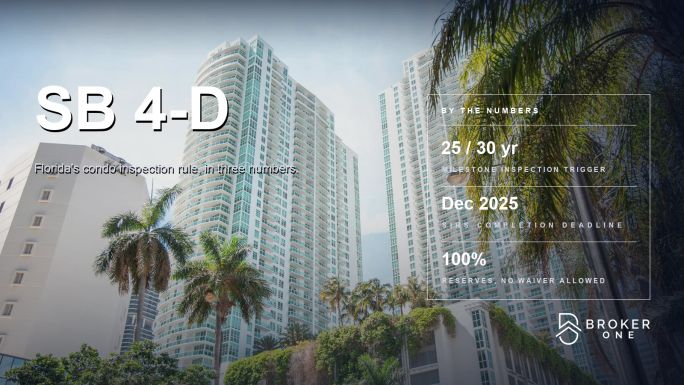
Florida’s SB 4-D added milestone inspection requirements for certain condominium and cooperative buildings. For buyers, the important point is that a milestone inspection is not the same thing as a casual walk-through or a routine maintenance review. It is a formal safety-focused process tied to the age and type of the building.
In general, milestone inspections apply to condominium and cooperative buildings that are three stories or more. The first milestone inspection is tied to the building’s age, and coastal proximity can accelerate the timing. Because the inspection rules are separate from local recertification programs, a building may need to comply with both.
Remember: A building can be dealing with a county recertification issue and a state milestone inspection issue at the same time. Buyers should ask for both sets of records.
That is especially important in Miami-Dade, Broward, and Palm Beach, where coastal exposure and older building stock often make inspection histories more relevant than the listing photos suggest.
What Happens If a Building Fails?
If an inspection finds deficiencies, the building usually does not simply ignore them. The association may be required to obtain more detailed engineering analysis, submit repair plans, complete corrective work, and schedule follow-up inspections. In some cases, access to parts of the property may be limited until the unsafe condition is corrected.
For buyers, a failed inspection can lead to delays, uncertainty, and higher ownership costs. For sellers, it can affect marketability. For investors, it can change the long-term return on the property.
- The association may need to make repairs before the building is considered compliant
- Special assessments may be used to fund the work
- Monthly condo fees may rise if reserve funding increases
- Lenders and buyers may ask for more documentation before closing
If a building fails, the right question is not “Can I still buy here?” but “What is the repair plan, who pays, and how long will it take?”
Critical alert: Do not waive document review on an older condo. If the inspection file is incomplete, you may inherit repair costs that were not obvious at the time of contract.
Timeline and Deadlines: How to Stay Ahead
The safest approach is to start early. Buyers, sellers, and boards should treat recertification as a planning process, not a last-minute scramble. The earlier a building is evaluated, the more time there is to budget, bid repairs, and schedule follow-up work.
- Identify the building’s age and whether it falls under local or state inspection rules.
- Request the latest reports and determine whether any repairs are open.
- Confirm whether the building has an upcoming milestone or recertification deadline.
- Plan for engineering review, bids, and board approval if work is needed.
- Allow time for repairs and any required reinspection before closing or refinancing.
One practical rule applies to almost every older condo: do not wait until the deadline year to ask questions. By then, the association may already be juggling vendor schedules, financing decisions, and resident concerns.
FAQ: Florida Condo Recertification Questions
Is the Florida building code changing in 2026?
Florida updates its building code on a regular cycle, so 2026 may bring changes depending on the current state schedule and edition in effect. Buyers should verify the active code with the local building department rather than relying on an older permit record.
What is a 40-year certification?
A 40-year certification is an age-based recertification process used for older buildings. It typically focuses on structural condition and electrical safety to determine whether the building can continue operating safely and whether repairs are needed.
Does Broward County require a 40-year recertification?
Yes. Broward County is one of the South Florida counties commonly associated with 40-year recertification for older buildings. Condo buyers should still verify the specific building’s status, because the exact timing and follow-up requirements can vary.
What condos are required to have a milestone inspection in Florida?
In general, condominium and cooperative buildings that are three stories or more are subject to milestone inspection requirements under SB 4-D. The first inspection is tied to the building’s age, and buildings in coastal areas can face earlier timing. Always confirm the building’s exact trigger with the association and local authorities.
Bottom line: In South Florida, the best condo purchase is not just the one with the best view. It is the one with a clear inspection history, known repair exposure, and transparent financial planning.
Ready to compare South Florida condos with more confidence? Start your search with Broker One at mybrokerone.com.