


Miami Springs: Glenn Curtiss Built a Town, and the Town Refused to Change
In 1926, aviation pioneer Glenn Curtiss bought a patch of land west of Miami and platted a community called "Country Club Estates." He designed it with wide streets, generous lots, and a mandate for Spanish and Pueblo Revival architecture. A century later, the streets still carry aviation names, the architecture is still enforced by a preservation board, and the residents still don't want a high-rise within city limits.
If you want a home with character in a town that has a spine about keeping it, Miami Springs is the play.
Miami Springs at a Glance
| Detail | Value |
|---|---|
| County | Miami-Dade |
| Population | ~14,000 |
| Founded | 1926 by Glenn Curtiss |
| Incorporated | 1926 |
| ZIP Code | 33166 |
| Median Household Income | ~$62,000 |
| Architectural Style | Spanish/Pueblo Revival (preservation-enforced) |
The Market: Appreciating Fast From an Accessible Base
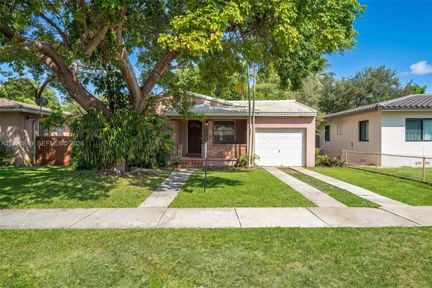
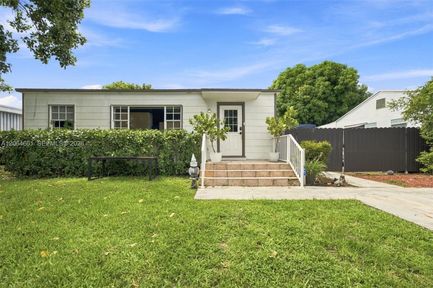
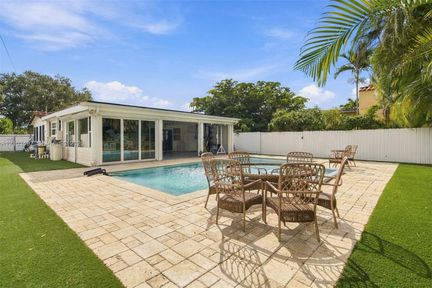
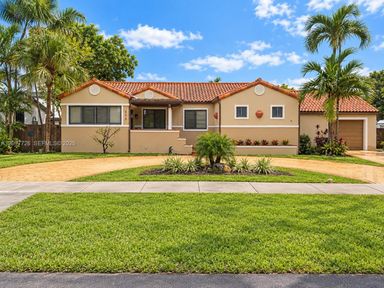
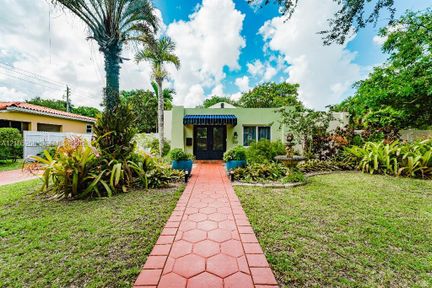
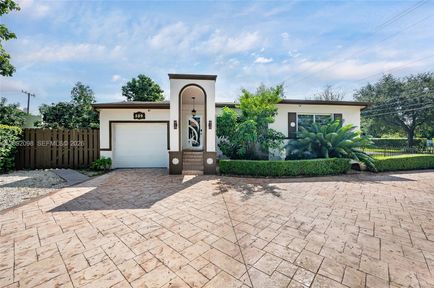
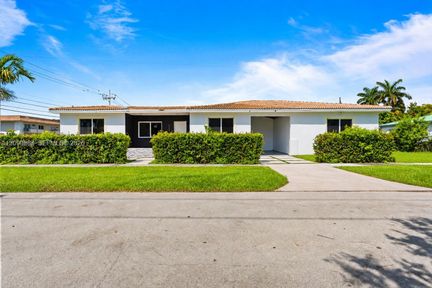
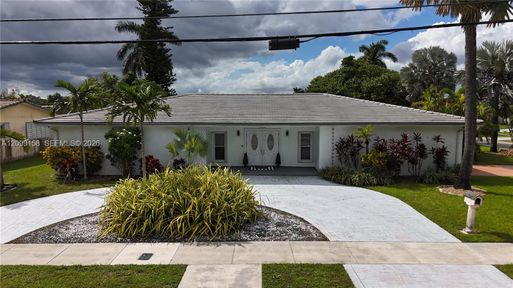
Miami Springs' median home price has historically sat below the Miami-Dade county average, but the gap is closing. Buyers are discovering what locals have known for decades: you can get a 3-bedroom Spanish Revival on a quarter-acre lot, in a walkable town with no HOA, for prices that would buy you a studio in Brickell.
Appreciation has been steady. The combination of historic preservation (which limits teardowns and overdevelopment), proximity to MIA, and the sheer charm of the housing stock keeps demand consistent. See current sales and pricing on brokerone.io.
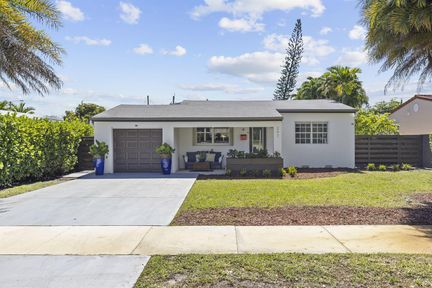
Miami Springs is one of the few Miami-Dade municipalities where the historic preservation board actively prevents the architectural homogenization that's flattened character in so many other neighborhoods. Your neighbor can't tear down a 1940s bungalow and put up a modern box. That's a feature, not a restriction.
Run numbers on your purchase with the Florida property tax calculator.
The Architecture: Why It Matters
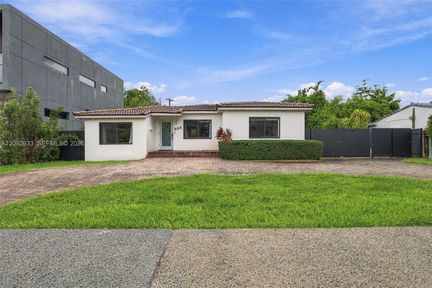
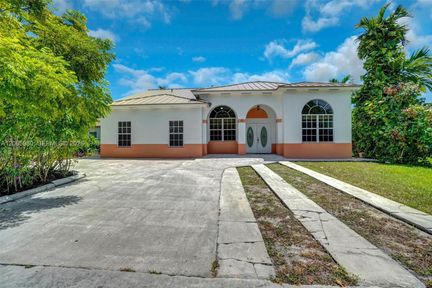
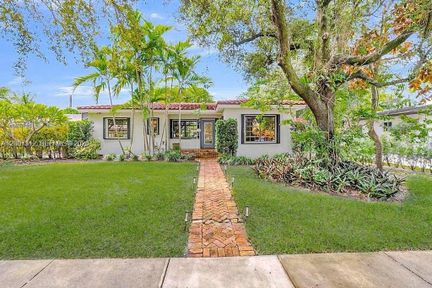
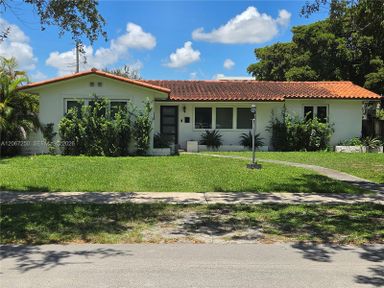
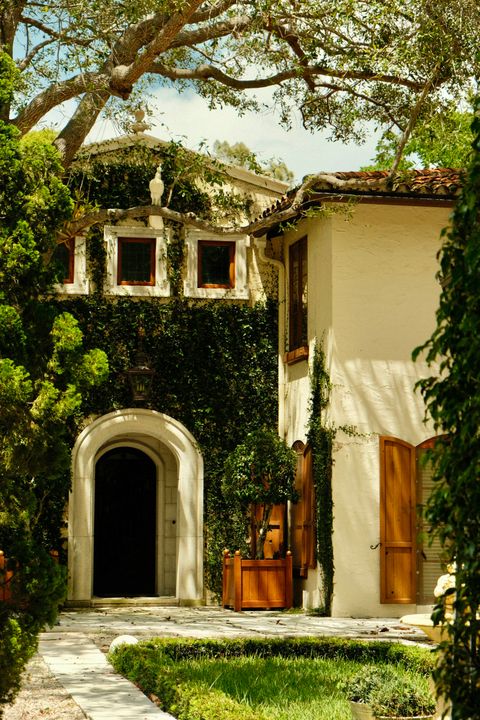
Glenn Curtiss mandated Spanish and Pueblo Revival styles for the original homes, and the city's Historic Preservation Board still enforces architectural guidelines for renovations and new construction. This means:
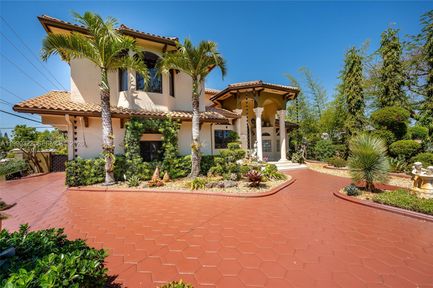
- Barrel tile roofs, stucco walls, arched doorways, and courtyards are the norm — not the exception
- Renovations require board approval for exterior changes, preserving streetscape consistency
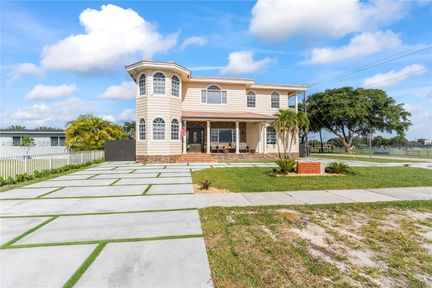
- No cookie-cutter McMansions. Every block has distinct character.
- Homes from the 1930s–50s dominate, with solid CBS (concrete block and stucco) construction
Is the preservation board a hassle for buyers?
It depends on your plans. Interior renovations are unrestricted. Exterior work — paint colors, roof materials, additions — needs approval. Most buyers see this as protection for their investment. If you want to build a glass-and-steel modern house, this is not your town. If you want a town that looks the same (in the best way) in 20 years, it's exactly right.
Living Next to MIA: The Honest Trade-Off
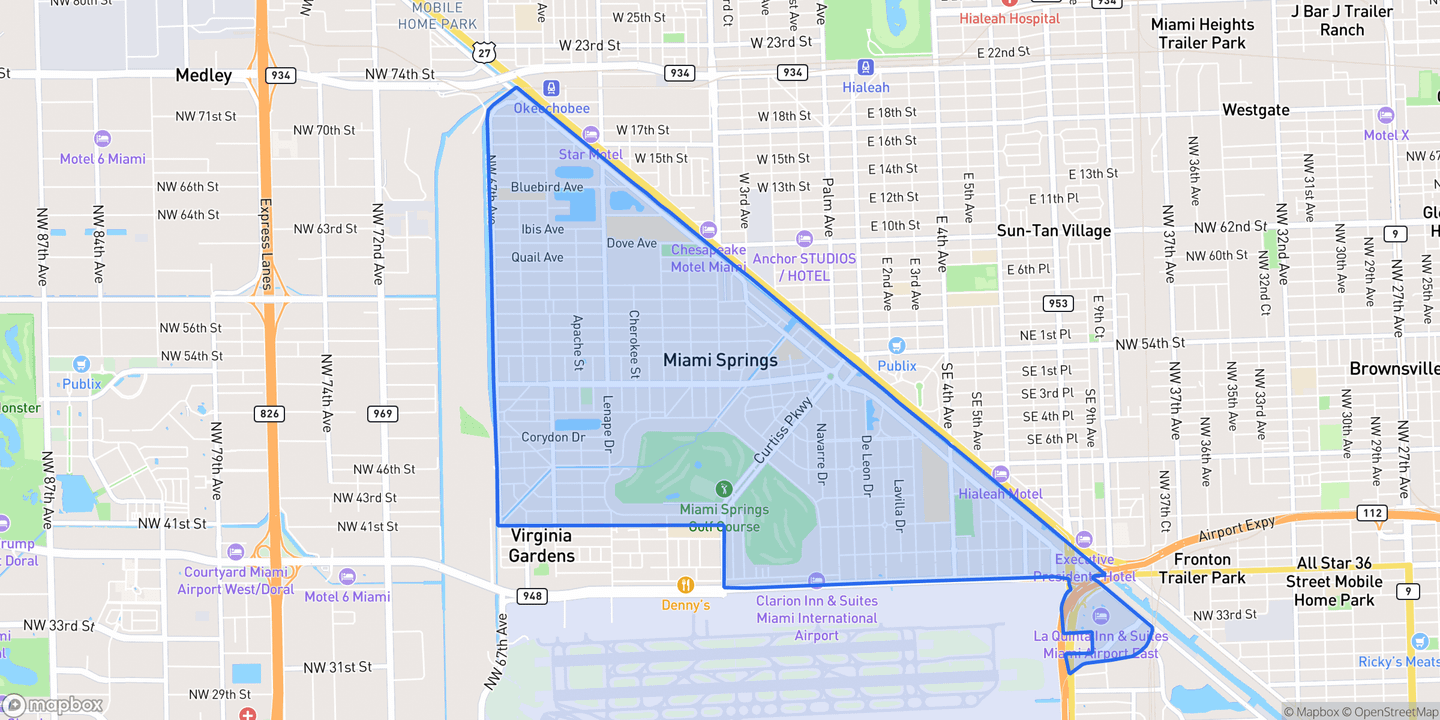
Let's address the elephant. Miami International Airport is immediately east of Miami Springs. Flight paths cross parts of the city. Here's what that actually means:
| Factor | Reality |
|---|---|
| Noise | Eastern sections hear takeoffs/landings. Western and central areas are quieter. You adapt faster than you'd expect. |
| Convenience | 5-minute drive to MIA departures. For frequent travelers, this is a life-changing commute. |
| Property Values | Airport proximity keeps prices lower than comparable architecture elsewhere — which is exactly why value buyers target this town. |
| FAA Sound Insulation | Many homes qualified for the FAA's residential sound insulation program. Impact windows + insulation = quiet interiors. |
Schools in Miami Springs
All public schools fall under Miami-Dade County Public Schools:
- Miami Springs Senior High — The town's high school since 1959. Known locally as "The Golden Hawks." Performing arts and athletics programs with deep community support.
- Miami Springs Elementary — Walkable from most neighborhoods. Small-town school feel despite being in a major metro.
- Palm Springs Elementary — Serves the western portion of the city. Bilingual programs available.
- Miami Springs Middle School — Feeds into Miami Springs Senior High. Recently renovated facilities.
Parks, Golf, and the Curtiss Mansion
Miami Springs Golf & Country Club is a public course — open to everyone, no membership required. An 18-hole course winding through the residential streets, maintained by the city. Friday afternoon rounds are a local tradition.
The Curtiss Mansion is Glenn Curtiss' original 1925 residence, restored and now operated as a historic landmark and event venue. Open for tours. The building itself — Mission Revival with a red barrel tile roof — is the architectural thesis statement for the entire town.
- Curtiss Park — The main community park. Playground, walking paths, community center.
- Circle Park — The town's central roundabout green space. Hosts seasonal events, farmers markets, and the annual holiday lighting.
- Royal Oaks Park — Sports fields, basketball courts, youth league home base.
Food and Daily Life
Miami Springs' dining scene is neighborhood-scale and better for it. Siam Rice on Westward Drive is the town's go-to Thai spot — BYOB, small room, excellent pad see ew. Rincon Argentino does empanadas and milanesas that pull diners from Hialeah and Doral. Mike's at Venetia is the local pizza-and-beer institution.
For groceries, Publix on Canal Street handles daily needs. The Hialeah Walmart and Costco are a 5-minute drive west.
How Miami Springs Compares
| Feature | Miami Springs | Doral | Hialeah |
|---|---|---|---|
| Vibe | Historic, preservation-minded | New construction, corporate | Dense urban, working-class |
| Architecture | Spanish/Pueblo Revival | Modern tract homes | Mixed, no preservation code |
| Home Prices | Below county average | Above county average | Below county average |
| HOA Prevalence | Rare (most homes are non-HOA) | Nearly universal | Varies |
| Airport Proximity | 5 min to MIA | 10 min to MIA | 15 min to MIA |
| Character / Walkability | High (small town feel) | Low (car-dependent) | Moderate |
Who Should Buy in Miami Springs
This town attracts a buyer who values substance over flash:
- The preservation buyer — You want a home with architectural character and a town government that protects it. You're buying a 1940s Spanish Revival and restoring it, not demolishing it.
- The frequent flyer — If you travel weekly for work, living 5 minutes from MIA terminal drop-off changes your quality of life. No Uber surge, no hour-long drives from Boca.
- The anti-HOA family — Most Miami Springs homes have no HOA. The city's preservation guidelines replace the need for one. You maintain your home to community standards because you care, not because a board fines you.
- The long-term hold investor — Limited new supply (preservation limits development) plus growing demand equals steady appreciation. This isn't a flip market; it's a hold market.
Search available homes and track recent sales in Miami Springs at brokerone.io.